
When a precision spinneret or filter arrives at your workshop, caked with stubborn polymers and seemingly beyond recovery, how do you restore it to factory-fresh cleanliness? The answer often hides in a single, tightly controlled number—the chamber temperature. This article moves beyond vague concepts and zeroes in on the core operating parameter of the vacuum degreasing furnace. The common question—“What temperature do I need? Is the difference between 500°C and 600°C significant?”—actually conceals a delicate trade-off among cleaning depth, throughput, and workpiece safety.
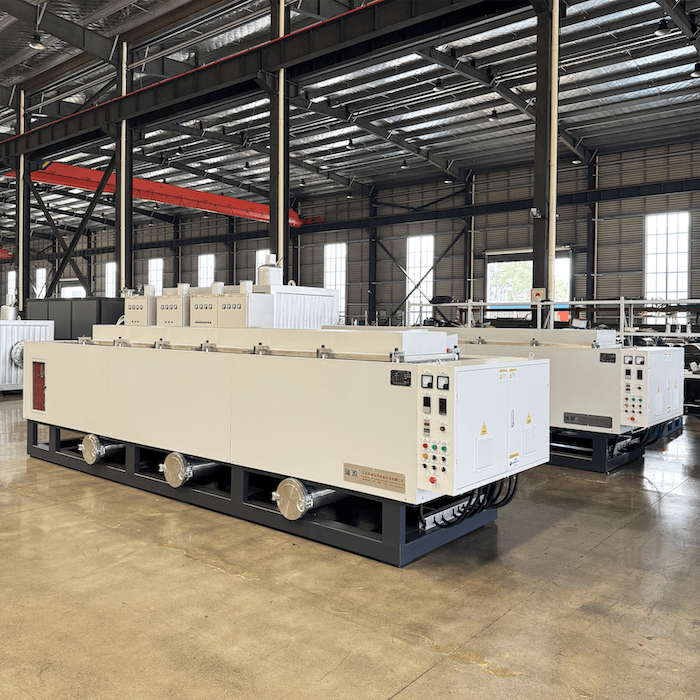
How a Vacuum Degreasing Furnace Works: The Two-Step Purification Logic
To understand why temperature is so critical, we must first revisit the working principle of the vacuum degreasing furnace. Its cleaning strategy relies precisely on the physicochemical properties of high-molecular polymers. The entire process follows a carefully orchestrated two-step purification journey, not a single abrupt reaction.
Step 1 – Melt Drainage: Removing the Bulk
As the chamber temperature rises to the melting point of the target polymer (for example, PP, PET, or PA, typically around 300°C), most of the adhered material softens and liquefies. Like molten wax, this liquid polymer flows downward under gravity and collects in a dedicated waste tank beneath the furnace floor. This step eliminates the majority of surface contamination quickly and efficiently.
Step 2 – Pyrolysis and Oxidation: Eliminating Residues in Deep Pores
The real challenge, however, lies in the stubborn remnants trapped inside microscopic channels—those that melting alone cannot dislodge. At this point, the vacuum degreasing furnace raises the temperature further to the 400–500°C range. This interval represents the “golden zone” where most polymers undergo cracking and carbonization under oxygen‑deficient conditions. Simultaneously, a vacuum pump creates a low‑oxygen atmosphere, while a precisely metered amount of air enters the chamber. Under the right balance of vacuum level and Trace amounts oxygen, the polymer molecular chains break apart and eventually oxidize into carbon dioxide and water vapor. These gaseous products, along with minimal ash residues, pass through a water‑spray scrubber and are safely evacuated by the vacuum pump. The elegance of this design lies in its internal pollutant digestion—no smoke, no hazardous emissions, only trace CO₂ and water. This makes the vacuum degreasing furnace an exemplary eco‑friendly cleaning solution.
So, What Is the Required Operating Temperature?
The answer depends heavily on your specific process requirements. While the maximum design temperature of a vacuum degreasing furnace can reach 600°C, the conventional deep‑cleaning range typically stays between 400°C and 500°C. This window effectively pyrolyzes and oxidizes the vast majority of common polymer residues.
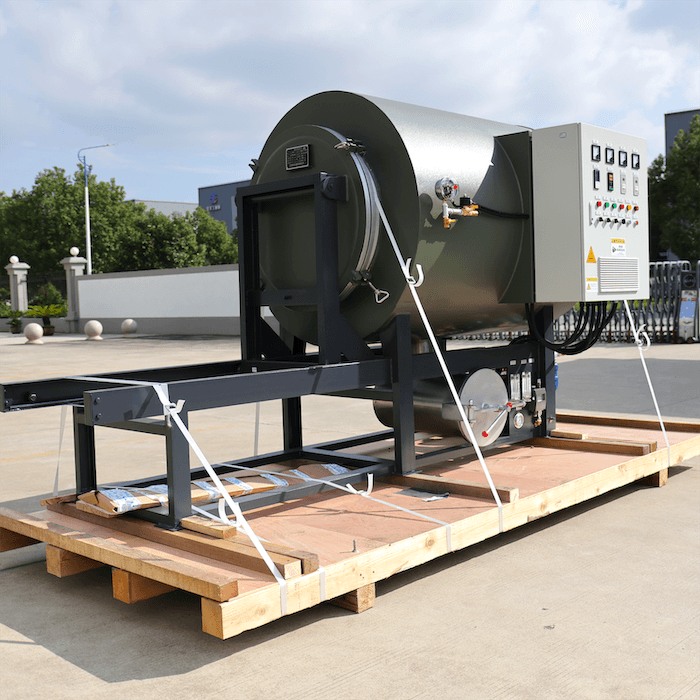
500°C vs. 600°C: Why the Difference Is Far from Trivial
Now we arrive at the pivotal question: is the gap between 500°C and 600°C really that large? Absolutely—but not in the sense that “higher is always better.” Instead, the distinction revolves around precise matching and risk management.
500°C – The Sweet Spot for Efficiency and Safety
For most routine cleaning tasks—such as spinnerets, screws, and filter elements in the chemical fiber industry, processing common polyesters, nylons, or polypropylene—500°C proves more than sufficient. At this temperature, pyrolysis and oxidation proceed rapidly and thoroughly, ensuring excellent cleaning results and unobstructed spinneret holes. Moreover, 500°C remains relatively gentle on precision metal components. It effectively removes contaminants while preserving the original metal structure, dimensional accuracy, and surface finish. This minimizes potential micro‑damage or alterations in material properties, significantly extending the service life of your valuable parts.
600°C – A Specialized Option for Extremely Stubborn Residues
Raising the upper limit to 600°C equips the vacuum degreasing furnace to handle more exotic or heavily carbonized pollutants. For instance, certain high‑performance engineering plastics (such as PEEK or PFA) or severely degraded deposits may demand higher temperatures for complete decomposition. However, you must exercise extreme caution when opting for a 600°C process. This temperature level consumes considerably more energy and imposes stricter demands on heating elements, chamber insulation, and sealing materials. More importantly, prolonged exposure to near‑600°C conditions—even with a vacuum environment that reduces oxidation—significantly increases thermal stress. This can irreversibly affect the microstructure and mechanical properties of many precision workpieces. Therefore, consider 600°C as a “reserve weapon”—only activate it after confirming process necessity and thoroughly evaluating part tolerance.
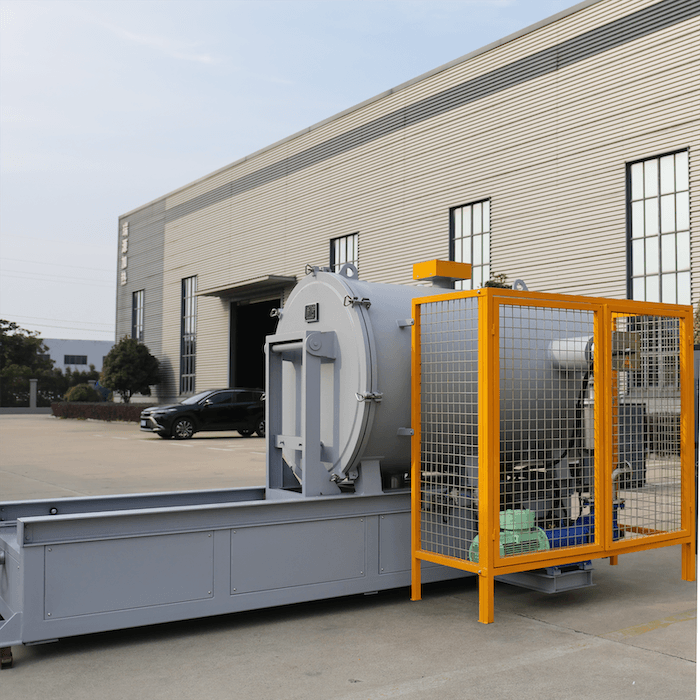
Making the Right Choice: A Comprehensive Assessment
Consequently, selecting 500°C or 600°C is never an arbitrary decision. It requires a holistic evaluation that includes:
- Composition of the contaminant polymer
- Material and geometry of the workpiece
- Required cleanliness level
- Energy cost and throughput considerations
A reputable equipment supplier will not simply promote the highest temperature rating. Instead, they will delve into your specific application and help you identify the most economical, safe, and effective temperature setting for your vacuum degreasing furnace.
The Backbone of Reliable Performance: Precision Temperature Control
Behind this decision lies a crucial technical enabler—accurate temperature regulation. Excessive temperature fluctuations not only compromise cleaning consistency but also endanger workpiece integrity. High‑quality vacuum degreasing furnaces achieve control precision of ±1°C or even better. How does this work in practice?
Closed‑Loop Control System
The core comprises a closed‑loop system that integrates advanced sensing technology, intelligent algorithms, and robust hardware. High‑precision thermocouples or platinum resistance sensors, strategically placed in the chamber, act as vigilant “temperature sentinels.” They feed real‑time signals to the control unit (typically a PLC or an intelligent IoT‑enabled controller). The control system then compares the actual temperature against the preset process curve and rapidly adjusts the heating power of the stainless‑steel electric heating tubes to maintain dynamic equilibrium.
Uniform Temperature Field
Thanks to a well‑designed chamber structure and direct heating from high‑quality tubes, the vacuum degreasing furnace achieves excellent thermal uniformity throughout the working zone. This eliminates localized hot or cold spots, ensuring every part receives identical thermal treatment.
Programmable Process Recipes
Furthermore, modern systems support fully programmable profiles. You can freely set ramp‑up rates, soak temperatures and durations, and cooling curves for complete automated cycles. This guarantees that each cleaning run reproduces the previous one with high fidelity, laying a solid foundation for process stability and product consistency.
Conclusion: Choose a Furnace That Understands the Art of Temperature
When you inquire about the temperature of a vacuum degreasing furnace, what you truly care about is selecting the optimal purification path for your precision parts. This is not a simple binary choice between two numbers—it is about finding the process solution that best matches your unique requirements. From the fundamental principles of melt‑pyrolysis, through the trade‑offs between 500°C and 600°C, to the underlying control technology that maintains accuracy within a hair’s breadth—every link in the chain determines whether your workpieces emerge rejuvenated or at risk.
Opting for a vacuum degreasing furnace that masters the art of temperature means embracing a philosophy of respect for your process and assurance of results. You gain more than a heated enclosure; you acquire an intelligent cleaning partner that deeply understands contaminants, cares for your parts, and faithfully executes your process intent. On the journey toward ultimate cleanliness, precise temperature remains the most critical key.