
In chemical fiber spinning production, spinnerets, filter cartridges, melt pipes, and other components remain in prolonged contact with molten polymers. Over time, carbon deposits and scaling accumulate on both surfaces and internal passages. If cleaning lags behind or uses improper methods, yarn quality drops directly, breakage rates rise, and spinning efficiency declines.
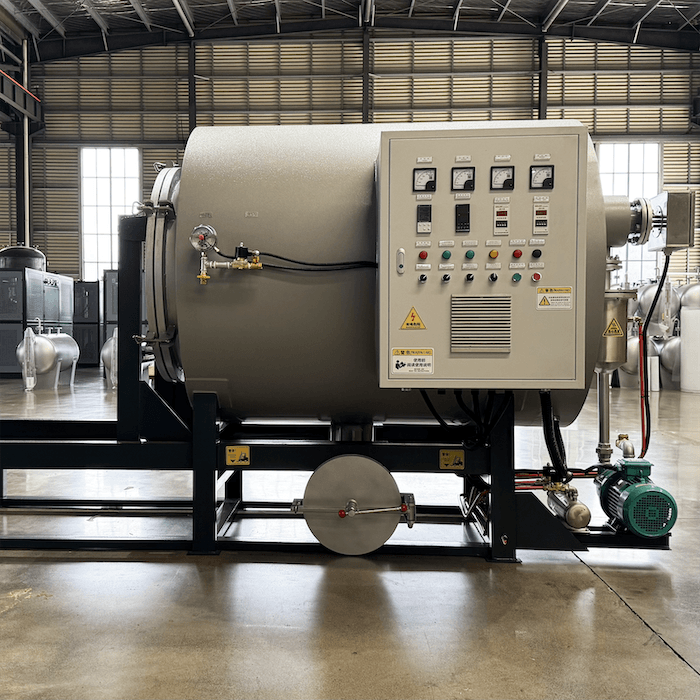
Traditional cleaning approaches—high‑temperature incineration and chemical solvent immersion—bring notable drawbacks. They generate heavy pollution, damage workpiece integrity, and leave hazardous residues. A vacuum cleaning furnace for filter cartridges offers a compelling alternative. It combines environmental friendliness, high efficiency, and superior workpiece protection. That is why this technology now leads the industry as the mainstream choice.
How Does a Vacuum Cleaning Furnace for Filter Cartridges Work?
This equipment relies on thermal cracking of polymeric materials under high temperature and vacuum. The process includes three distinct stages:
Melting stage: Operators place the components into the furnace chamber. Heating proceeds to about 300 °C. At this point, adhered polymers—such as PET, PA, or PP—melt and flow out of the parts.
Cracking stage: The temperature then rises to 400–500 °C. Under vacuum, the system introduces a minute amount of air. This environment triggers oxidative cracking of the remaining polymer, converting it into CO₂ and water vapor.
Cooling stage: The furnace maintains vacuum while cooling down. This step prevents high‑temperature oxidation from damaging the metallic surface of the workpieces.
The entire cleaning cycle involves no open flame and poses no risk of combustion or explosion. Exhaust gases consist solely of CO₂ and water vapor, which easily meet strict environmental emission standards.
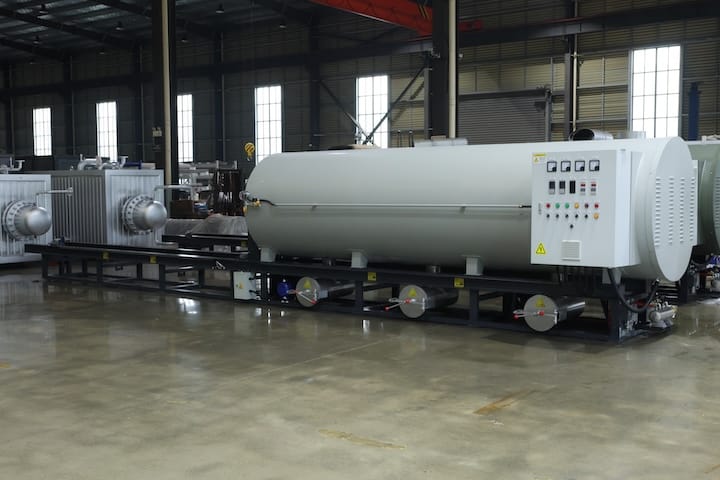
Technical Specifications of the Vacuum Cleaning Furnace for Filter Cartridges
Ruiyuan offers a comprehensive product line of vacuum cleaning furnaces for filter cartridges, with models covering diverse production needs. The table below summarizes key parameters:
| Parameter | Specification |
|---|---|
| Maximum working temperature | 600 °C (adjustable) |
| Temperature control accuracy | ±1 °C |
| Vacuum level | –0.095 MPa |
| Furnace structure | Horizontal / Vertical / Cabinet / Pit‑type (optional) |
| Applicable components | Spinnerets, filter cartridges, die heads, distribution plates, melt pipes, screws |
| Suitable polymers | PET, PA, PP, PVDC, PMMA, PC, PEEK, PFA, PS, and more |
Which Components Can This Vacuum Cleaning Furnace Clean?
Different parts require thorough and gentle residue removal. The vacuum cleaning furnace for filter cartridges excels across all these critical items:
1. Spinnerets – These are the core elements in fiber spinning, with micro‑holes as small as 0.1–0.5 mm in diameter. The vacuum cracking process clears internal coke deposits completely, while it leaves the delicate orifice geometry untouched.
2. Filter cartridges – As essential filtration elements for polymer melts, these cartridges accumulate deep‑seated fouling. The vacuum furnace breaks down those contaminants internally, thereby restoring original flow capacity.
3. Die heads and distribution plates – These large‑size flow‑channel components require uniform heating. The vacuum cleaning furnace for filter cartridges delivers even thermal distribution, so it eliminates dead corners and ensures thorough cleaning.
4. Melt pipes and screws – Long tubular parts pose challenges for inner‑wall cleaning. However, the vacuum furnace provides homogeneous heat along the entire length. Consequently, cracking proceeds fully, and residues do not remain inside.
Environmental Advantages in Detail
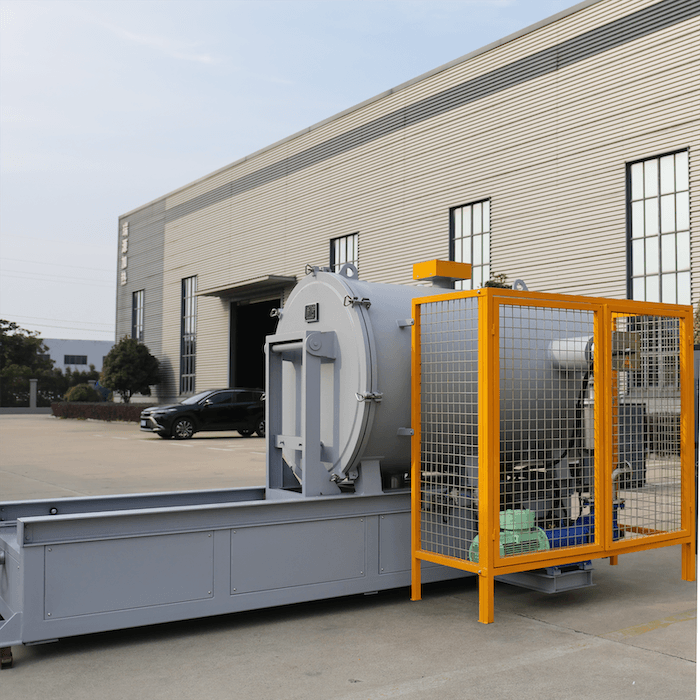
Conventional incineration emits massive smoke, toxic gases, and solid waste. By contrast, the vacuum cleaning furnace for filter cartridges brings multiple green benefits:
Zero pollutant discharge – Off‑gas consists only of CO₂ and water vapor. Thus, you need no additional exhaust‑gas treatment devices.
No solid residue – Polymers crack completely into gaseous species. No char or ash stays behind.
Superior workpiece protection – The vacuum atmosphere prevents oxidation at high temperatures. As a result, components last 3 to 5 times longer than those cleaned by traditional methods.
Energy‑efficient and fast – A single cleaning cycle takes only 2 to 6 hours, depending on component size and polymer type. This short turnaround reduces downtime and saves energy.
Why Choose Ruiyuan’s Vacuum Cleaning Furnace for Filter Cartridges?
Our equipment stands out for its robust construction, precise temperature control, and flexible configuration. Whether you process standard polyesters or high‑temperature engineering plastics like PEEK, the furnace adapts reliably. Moreover, the vacuum cleaning furnace for filter cartridges reduces maintenance costs and improves yarn quality—two factors that directly boost your bottom line.
For more detailed model selection and customized solutions, please visit our product catalog or refer to our technical application guide. You can also check industry best practices on polymer processing cleanup to benchmark your current process.
Final Note:
Adopting a vacuum cleaning furnace for filter cartridges means you embrace sustainable manufacturing without sacrificing performance. It eliminates hazardous waste, preserves expensive tooling, and ensures consistent spinning output. Transitioning to this technology represents a sound investment for any modern fiber plant.