
In chemical fiber production, the spinneret stands as one of the most critical precision components in the spinning process. Even a single blocked micro-hole can trigger broken filaments, rough yarn, or outright product downgrading across entire batches. Consequently, cleaning efficiency and cleaning quality for spinnerets directly determine a plant’s production capacity and final yield rate.
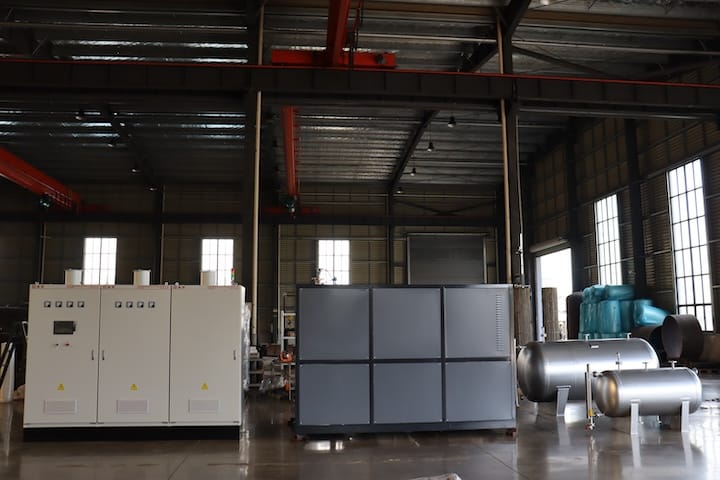
Traditional cleaning methods—salt-bath furnaces and high-temperature incineration—are gradually losing ground in the industry. They consume excessive energy, generate heavy pollution, and significantly shorten spinneret service life. In contrast, vacuum-based thermal cleaning, especially the specialized Vacuum Cleaning Furnace for Spinneret, now becomes the standard configuration across modern chemical fiber enterprises.
Key Industry Pain Points Addressed by the Vacuum Cleaning Furnace for Spinneret
| Pain Point | Traditional Approach | Vacuum Cleaning Furnace for Spinneret Solution |
|---|---|---|
| Spinneret Damage | High-temperature incineration reduces hardness and distorts hole geometry | Vacuum inert environment ensures zero oxidation |
| Energy Consumption | Continuous heating for 8–12 hours, high electricity draw | Programmed control saves up to 40% energy versus conventional processes |
| Environmental Compliance | Heavy fumes and volatile organic compounds (VOCs) from combustion | Off-gas contains only CO₂ and H₂O — zero hazardous emissions |
| Cleaning Completeness | Micro-holes often retain carbonized residues | Pyrolysis combined with micro-oxidation removes all residual contaminants |
| Automation Level | Manual operation, heavily experience-dependent | Fully automated PLC touchscreen control with one-touch start |
These five advantages clearly explain why forward-looking manufacturers switch to this cleaning system without delay.
Working Principle of the Vacuum Cleaning Furnace for Spinneret
The Vacuum Cleaning Furnace for Spinneret, manufactured by Jiangsu Ruiyuan (a specialized variant of vacuum pyrolysis furnaces for fiber applications), operates on the fundamental principle of thermal pyrolysis of polymeric materials under controlled conditions.
Stage 1 – Heating and Melting (up to ~300°C):
Under nitrogen protection, residual polymers on the spinneret—such as PET, PA, and PP—first melt and begin degrading.
Stage 2 – Vacuum Pyrolysis (400–500°C):
The system draws a vacuum down to –0.08 MPa and introduces a controlled micro-dose of air. At this stage, the residues oxidize thoroughly into CO₂ and water vapor.
Stage 3 – Cooling and Cleaning:
After the furnace cools down, operators remove the remaining ash. The spinneret regains its original metallic luster and full channel clarity.
Throughout the entire cycle, temperature control accuracy holds at ±1°C, which preserves the spinneret’s dimensional precision. A single cleaning cycle typically lasts 6 to 10 hours, depending on the type and thickness of contaminants.
Technical Specifications and Product Variants
| Parameter | Specification |
|---|---|
| Maximum Temperature | 600°C (adjustable) |
| Temperature Accuracy | ±1°C |
| Vacuum Level | –0.08 to –0.095 MPa |
| Furnace Configuration | Horizontal, vertical, or cabinet style (optional) |
| Chamber Dimensions | Custom-built to match spinneret sizes |
| Heating Method | Electric heating with independent zone control |
| Control Interface | PLC touchscreen with full automation and remote monitoring capability |
| Compatible Polymers | PET, PA, PP, PEEK, PFA, PS, PMMA, and more |
This versatile thermal cleaning unit adapts easily to various production line setups.
Proven Case Study: How One Plant Transformed Its Operations
A major domestic polyester producer—with an annual output of 800,000 tons—previously operated eight high-temperature incineration cleaning units. At that time, their spinneret service life averaged only 8 to 10 months.
After switching to the Ruiyuan Vacuum Cleaning Furnace for Spinneret, the plant achieved remarkable improvements:
- Spinneret service life extended to 24 months — a 140% increase
- Energy consumption per cleaning cycle dropped by 42%
- Annual VOC emissions reduced by approximately 6.5 tons
- Cleaning yield rate rose sharply from 85% to over 99%
- Total annual comprehensive cost savings reached about RMB 1.2 million
These results demonstrate that investing in advanced pyrolysis cleaning equipment pays for itself within a short payback period.
Policy-Driven Upgrade Recommendations for 2026 and Beyond
With the official implementation of the Chemical Fiber Industry Green Manufacturing Promotion Plan, enterprises must act decisively during this equipment-renewal window. Consider the following strategic recommendations:
1. Phase out incineration-based cleaning units without delay.
These outdated systems fail to meet current emission standards and accelerate spinneret wear significantly.
2. Choose qualified manufacturers with proven credentials.
Verify that your supplier holds proper pressure-vessel manufacturing licenses and explosion-proof certifications—this ensures both safety and long-term reliability.
3. Prioritize intelligent, data-enabled models.
A modern Vacuum Cleaning Furnace for Spinneret that supports remote monitoring and data logging will integrate seamlessly into future digital factories. Such features also facilitate traceability and process optimization.
Taking these steps early will position your plant ahead of regulatory deadlines while boosting operational efficiency.
Conclusion: A Smart Investment for Quality, Cost, and Compliance
In summary, the Vacuum Cleaning Furnace for Spinneret is not merely a piece of auxiliary equipment—it stands as a strategic asset for safeguarding product quality, reducing production costs, and ensuring full environmental compliance. For chemical fiber manufacturers aiming at long-term sustainability, adopting a professional vacuum-based cleaning technology represents a wise and forward-looking choice.