
Workshops fear one thing most: not the workload itself, but working hard without getting the job done right.
Cleaning of synthetic fiber components is a typical example. You disassemble, soak, and rinse. Yet the channels still clog, residues stick, and post-assembly pressure drops fluctuate. Worse, any attempt to boost cleaning efficiency faces constant pressure from safety and environmental rules—heating, chemicals, waste disposal—none can go wrong.
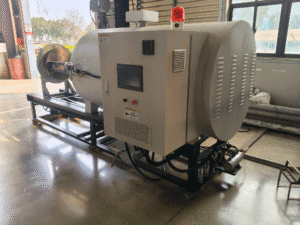
So back to the core question: What efficient equipment do we recommend for cleaning of synthetic fiber components? If you want to save labor, time, and headaches while locking in performance, stability, and compliance, the answer usually is not a single tool. Instead, you need a cleaning equipment system that controls the key variables.
Let’s break down the real logic behind efficient cleaning.
Cleaning of Synthetic Fiber Components: What Actually Slows Down Efficiency?
Many people first ask about power, tank size, or “can it clean well.” But the true drag on efficiency often comes from these factors:
1) Unstable temperature
Cleaning of synthetic fiber components is temperature-sensitive. Temperature fluctuation does not just slow you down—it leaves residues unremoved and forces repeated cleaning. When you have to clean again and again, efficiency drops by half.
2) Uncontrollable process
The required temperature hold fails. The circulation flow is too low. Residual liquid remains in the system. Each small error leads to inconsistent results. To stay safe, you add more time, more labor, and more rework.
3) Safety and compliance slow you down
You want higher efficiency, but you worry about heating risks, chemical exposure, and waste discharge. Operators become cautious. Processes stretch out. The result: “playing safe” kills speed.
Therefore, efficient equipment is not about being more aggressive. It is about being more controllable: precise temperature, stable process, clear safety boundaries. Only then can you truly raise cleaning efficiency.
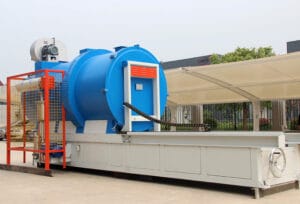
How to Choose Efficient Equipment for Cleaning of Synthetic Fiber Components? Focus on Four Capabilities
When comparing equipment suppliers, pay attention to these four keywords. They decide whether you buy a time-saving production tool or a new headache.
1. Precise Temperature Control – The Foundation of Stable Cleaning
Temperature control means more than just heating. It requires accuracy, uniformity, and repeatability. When the temperature hits the target but fluctuates, the cleaning medium works inconsistently. When the temperature stays stable but unevenly, batch results vary.
With precise control, you will see two changes: cleaning time becomes predictable, and rework drops significantly. That is where efficiency improvement begins.
2. Safety That Enables Speed – True Efficiency
Cleaning of synthetic fiber components often involves heating and chemical media. Equipment must eliminate risks upfront. A well-designed system lets operators rely on engineering controls, not personal experience, to prevent errors, overheating, and abnormal conditions.
Safety should never be an excuse for slow cleaning. When safety design works properly, efficiency can run fast.
3. Environmental Protection and Energy Saving – Long-Term Cost, Not a Bonus
Many workshops only look at the equipment price. They forget operating costs: energy consumption, media usage, waste treatment, and compliance. Good environmental and energy design means you get more output with fewer resources. That is true long-term efficiency.
Moreover, stable environmental compliance saves you from inspections, corrective actions, and unplanned downtime. That is also part of efficiency.
4. Customization – Standard Machines Rarely Fit Your Components
Different component geometries, contamination types, and process requirements exist. Forcing a standard machine onto your job often leads to either poor cleaning or excessively long cycles.
Customization matches cleaning, circulation, temperature control, safety interlocks, and waste handling to your specific component specs, production rhythm, and floor space. This avoids endless retrofitting later.
Why Do Many People Mention Ruiyuan Equipment?
During actual selection, users care most about these points: Can you tailor the system to my site? Is it reliable? Are results stable? Is it safe to operate? What are long-term costs?
Based on these concerns, Ruiyuan Equipment frequently appears for the following proven features:
- Customizable – They match the solution to your site and component conditions, rather than forcing you to adapt to a generic machine.
- Full certifications – Compliance is the baseline, especially for heating, process equipment, and environmental requirements. Certifications and delivery capability determine your future risks.
- Precise temperature control – They stabilize the core variable that drives cleaning effectiveness.
- Safety and efficiency – Speed no longer depends on operator experience. Instead, the equipment’s safety design and process control enable faster cycles.
- Environmental and energy saving – They consider long-term operating costs and compliance pressure, not just short-term cleaning speed.
If your goal is to raise efficiency without adding management burden, these five features directly address the real pain points in cleaning of synthetic fiber components.
Three Questions to Quickly Judge if Equipment Deserves a Talk
Use these three simple questions during your evaluation:
- “Can you keep the temperature stable within my required range and consistent from batch to batch?”
- “How does the system protect against abnormal conditions? Can my workers follow standard procedures and safely complete the job?”
- “What are the long-term costs for energy, media, and waste treatment? Do you have energy-saving and environmental designs?”
If a supplier answers these clearly, you are on the right track. If they only quote parameters but avoid process control, you will likely step into trouble later.
For a deeper dive into industrial cleaning best practices, check out our guide on optimizing cleaning processes for synthetic fibers.
Final Thought: The End of Efficiency Is Stable Delivery
The efficiency of cleaning of synthetic fiber components is never about how fast one batch cleans. It is about cleaning steadily and thoroughly every day, with consistent post-assembly indicators, without sudden slowdowns due to safety or environmental issues.
If you are making a decision on “what efficient equipment for cleaning of synthetic fiber components,” shift your focus from “buying a machine” to “locking down a system that controls key variables.” Precise temperature control forms the foundation. Safety enables the speed. Environmental and energy design calculates long-term value. Customization solves unique differences.
Which step currently bottlenecks your component cleaning: temperature, time, residue, or rework? Share your site specifics, and we can help tighten the selection criteria into a concrete cleaning solution.