
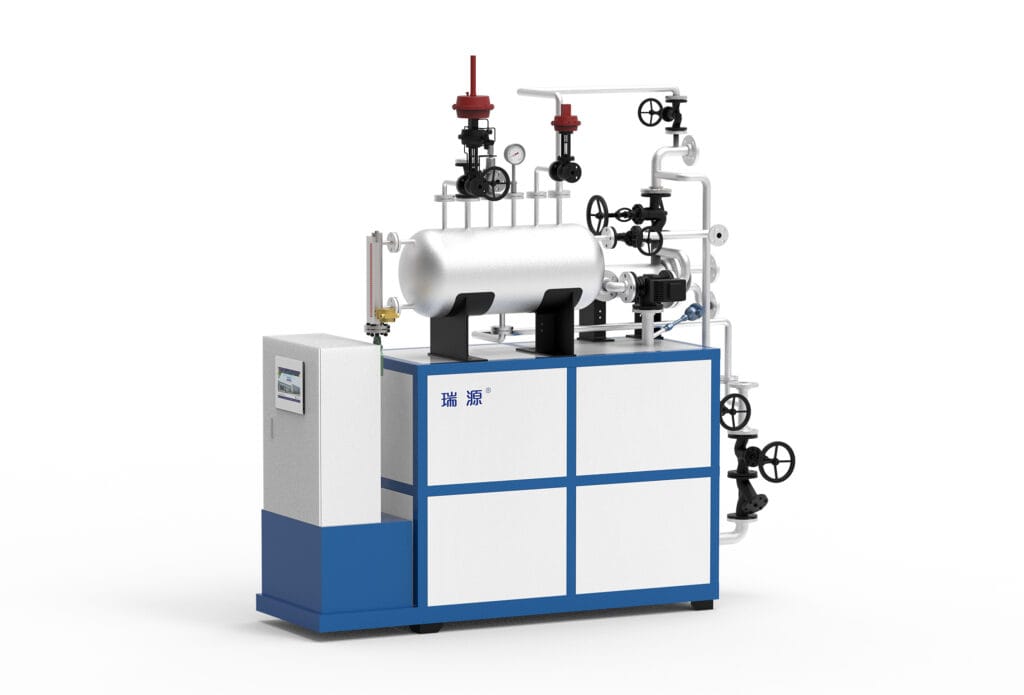
Electric thermal fluid heaters, as crucial equipment in modern industrial heating, have become the preferred choice for thermal energy supply in numerous industries due to their high efficiency, safety, and environmental friendliness. This article systematically introduces the working principles, technical features, selection guidelines, maintenance and safety consideration. It aims to assist enterprises and users in fully understanding and scientifically selecting this type of equipment.
I. Working Principles and Technical Features of Electric Thermal Fluid Heaters
Electric thermal fluid heaters primarily use electric heating elements, such as heating tubes or rods, to convert electrical energy into thermal energy, thereby directly heating the thermal oil. The heated thermal oil, driven by a circulation pump, flows through the target equipment or process, transferring heat to achieve continuous and stable high-temperature heating. Typically, the system includes a heating unit, thermal oil medium, circulation pump, temperature control system, expansion tank, and storage tank. It operates as a closed-loop circulation system, offering precise temperature control and high-temperature output under low-pressure conditions.
Key technical advantages include:
- High thermal efficiency: Electrical heating acts directly on the thermal oil, resulting in high energy conversion efficiency and minimal heat loss. Thermal efficiency can exceed 98%.
- Precise temperature control: High-precision temperature sensors and intelligent PID control enable sensitive temperature adjustment, meeting constant temperature requirements for various processes.
- High temperature at low pressure: The system achieves temperatures above 300°C under atmospheric or low-pressure conditions, offering significantly higher safety compared to traditional steam boilers.
- Environmental friendliness: With no smoke, dust, or exhaust emissions, the system complies with green factory standards and environmental regulations.
II. Selection Guide and Purchasing Considerations
When selecting an Electric thermal fluid heater, consider the following factors:
- Heating power and temperature requirements: Choose an appropriate power model based on the maximum temperature and heat load required for the process.
- System configuration: Focus on the quality of heating elements, the performance of the circulation pump, the intelligence level of the temperature control system, and the safety protection devices.
- Thermal oil selection: Use thermal oil suitable for the required temperature range and with good thermal stability to extend equipment lifespan.
- Installation space and process layout: Plan the equipment size and layout reasonably to ensure convenient maintenance and operation.
- Brand and after-sales service: Prefer manufacturers with experience and a good reputation to ensure technical support and component availability.
III. Maintenance and Safety Considerations
To ensure long-term stable operation, perform the following maintenance regularly:
- Regularly inspect the operating status of heating elements, temperature control systems, and circulation pumps, and replace aged parts promptly.
- Periodically test the quality of the thermal oil to prevent coking and oxidation, and replace the oil when necessary.
- Maintain system sealing to prevent oil leakage and moisture intrusion.
- Check electrical wiring and insulation to avoid short circuits and leakage risks.
- Follow the manufacturer’s instructions for regular cleaning and draining to prevent impurities from affecting heat exchange efficiency.
- Equip the system with multiple safety protection devices, such as over-temperature, over-pressure, and low-oil protection, to ensure timely alarms and automatic power shutoff in abnormal situations.
Conclusion
Electric thermal fluid heaters offer several key advantages, including high efficiency, precise temperature control, and excellent safety. These benefits have made them essential equipment in modern industrial heating. They serve a wide range of high-temperature heat supply scenarios across various industries. As a result, they provide an ideal solution for achieving green factories and smart manufacturing.
When selecting and using these systems, enterprises need to pay close attention to several factors. These include proper system configuration, regular daily maintenance, and thorough safety management. By doing so, they can ensure efficient, stable, and economical operation.
Looking ahead, technology continues to advance, and market demand keeps growing. Therefore, the electric thermal fluid heater industry will embrace even broader development prospects in the future.
Chat now to speak with our team.
more article:
What is an Electric Thermal Fluid Heater? A Comprehensive Technical Guide