
Introduction
In industrial processes that require precise and uniform high-temperature heat, electric thermal fluid heaters offer a highly efficient and controllable solution. People also know these systems as electric thermal oil heaters or boilers. Unlike systems that rely on steam or combustion, they use electricity to heat a specialized thermal fluid. This fluid then circulates throughout the system to transfer heat to process equipment. This article provides a detailed technical overview of how these heaters operate, how we design them, and what benefits they bring.
Core Working Principle
An electric thermal fluid heater operates as a closed-loop system. It uses electricity as the energy source to generate and transfer heat. The core process involves three key stages:
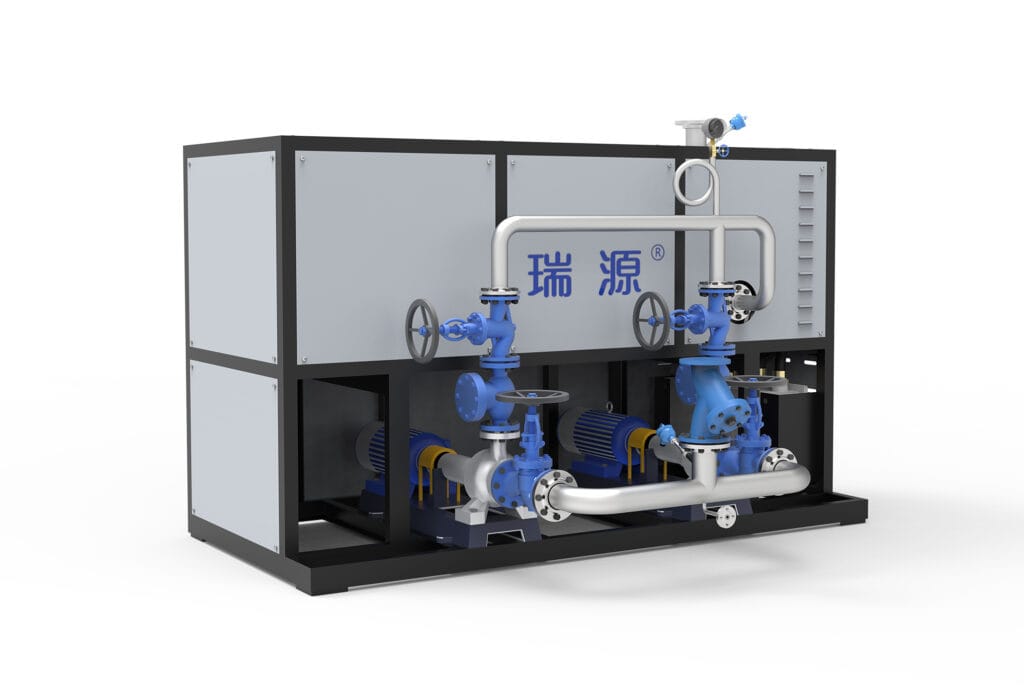
- Electric Resistance Heating – The system converts electrical energy into thermal energy using immersed, flanged, or circulation-type electric heating elements. These elements directly heat the thermal fluid, a specially formulated oil, inside a system of pipes and an insulated vessel or heater bank.
- Heat Transfer via Circulation – The heated thermal fluid remains in a liquid phase even at high temperatures, often up to 350°C (662°F) or higher with specialized fluids. A pump moves this fluid through the closed circuit. From there, the fluid flows to one or more user points, such as reactors, presses, molds, or drying rolls.
- Heat Exchange and Return – At the user point, the thermal fluid passes through a heat exchanger, such as a coil or jacket. Here, it releases its sensible heat to the process. The cooled fluid then returns to the heater for reheating, creating a continuous cycle.
Key System Components
A standard electric thermal oil system includes several integral components:
- Heating Element Assembly – This assembly serves as the heart of the system. It consists of high-grade alloy sheathed electric heating rods or bundles, often grouped in stages for proportional power control.
- Expansion Tank – This separate, typically unpressurized tank accommodates the thermal expansion and contraction of the fluid. It also prevents oxidation and allows for degassing.
- Circulation Pump – This robust, high-temperature pump, usually a centrifugal type, ensures consistent and reliable flow of the thermal fluid throughout the entire loop.
- Power Control Cabinet – This cabinet houses the electrical controls, contactors, SCR (Silicon Controlled Rectifier) power controllers, and a Programmable Logic Controller (PLC). The system manages heating stages, temperature regulation, and system safety from this central point.
- Heat User Interface – This is the point of consumption, where the process equipment extracts heat via a heat exchanger.
- Safety and Instrumentation – These components include high-temperature limits, low-flow switches, pressure gauges, temperature sensors, and relief valves. Together, they ensure safe operation.
Primary Advantages and Characteristics
Electric thermal fluid heaters offer distinct benefits for specific applications:
- High-Temperature Capability at Low Pressure – Unlike steam systems, thermal oil remains liquid. This allows high process temperatures (300°C+) without requiring high-pressure vessels.
- Precise Temperature Control – Electric heating works together with PID controllers and multi-stage power switching. This combination delivers exceptional temperature stability and accuracy, often ±1°C or better.
- High Thermal Efficiency – The system converts nearly 100% of the electrical energy into usable heat within the fluid. Well-insulated components also minimize standby losses.
- Clean and Environmentally Friendly – The operation produces no local combustion emissions, fumes, or exhaust gases. It runs quietly and eliminates the need for fuel storage or handling.
- Reduced Maintenance – With no burners, combustion chambers, or high-pressure boilers, maintenance becomes simpler. Users also face no risk of freezing or corrosion, which are common with water-based systems.
- Compact Design and Easy Installation – These heaters often require less floor space than fuel-fired boilers. They also need no chimneys or complex fuel supply lines.
Common Industrial Applications
These heaters are ideal for processes that demand uniform, indirect heat:
- Chemical & Pharmaceutical – Reactor heating, distillation, synthesis, and ingredient drying.
- Plastics & Rubber – Mold heating for extrusion, lamination, compression molding, and vulcanization.
- Food Processing – Indirect cooking, frying oil temperature maintenance, and drying operations.
- Textile & Non-woven – Heat setting calendars, drying cans, and laminating presses.
- Building Materials – Asphalt heating, composite material production, and board pressing.
- Energy & Environmental – Pre-heating fuels or process streams in solar thermal and biomass plants.
Conclusion
The electric thermal fluid heater offers a sophisticated, efficient, and clean technology for industrial process heating. It operates on a simple principle: indirect heat transfer via a circulating thermal oil. This design delivers superior temperature control, enhanced safety, and great operational flexibility for high-temperature applications.
When selecting a system, you need to consider several critical factors. These include the required process temperature, the heat load (measured in KW), the thermal fluid characteristics, and the specific configuration of your user equipment.
For facilities that have access to a stable electricity supply and seek precise, reliable, and low-maintenance heat, an electric thermal oil heater provides a compelling technical solution.
Chat now to speak with our team.
more article: