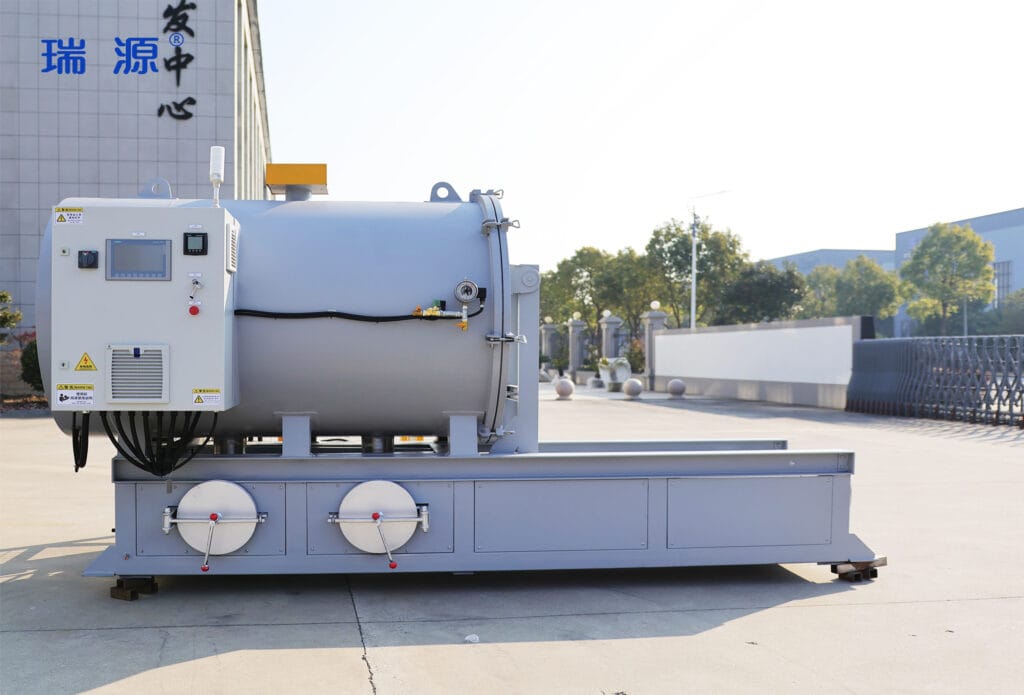
Thermal fluid heaters, also known as thermal oil heaters, are high-efficiency heating systems widely used in industrial processes. Their operational stability directly affects production safety and efficiency.
However, operators may encounter several typical issues during practical use. This article systematically analyzes common failures, including symptoms, root causes, and professional response protocols. We aim to help users quickly diagnose problems and take correct measures, ensuring safe, stable, and efficient system operation.
1. Abnormal System Pressure
System pressure is a key parameter for monitoring the circulation state within an organic heat transfer fluid system. Low or absent pressure indicates a problem with the circulatory power or system integrity.
- Root Cause Analysis:
- Circulation Failure: The circulating pump may not be operating, or an incorrect power phase sequence may be causing it to run in reverse, preventing it from building pressure.
- Loss of System Integrity: Severe leakage may be occurring at pipeline connections, valves, flange gaskets, or welds.
- Improper Expansion Line Design: The expansion pipe connecting to the expansion tank may have an incorrect reducer, an isolation valve mistakenly installed, or a blockage. This can cause the system to vent to atmosphere, preventing pressure maintenance.
- Insufficient Heat Transfer Fluid: A severe shortage of fluid in the system prevents proper filled-line circulation.
- Faulty Instrumentation: The pressure gauge itself could be damaged, or its impulse line blocked, leading to inaccurate readings.
- Professional Response Procedure:
- Inspect the Circulating Pump: Verify the pump is running. Check the pump’s rotation direction against its indicated arrow or listen to the sound; it should be clockwise. If it’s reverse rotation, stop the pump immediately and have a qualified electrician correct the power phase sequence.
- Initiate Emergency Shutdown and Leak Check: Execute an emergency shutdown immediately. Once the system cools to a safe temperature, conduct a thorough inspection of the entire system. Focus on valve stems, flange gaskets, the pump’s mechanical seal, and all welds. After repairing any leaks, conduct a pressure test according to specification to confirm integrity.
- Verify the Expansion Pipe: Inspect the expansion pipe installation for compliance. Ensure it has a full bore connection with no valves, features gentle bends (recommended angle ≥120°), and is clear of any blockages.
- Replenish Heat Transfer Fluid: Add the approved, same-grade fluid into the system via the expansion tank until the low-level alarm resets and a normal operating level is maintained.
- Calibrate or Replace the Gauge: Check and clean the pressure gauge impulse line, or calibrate/replace the pressure gauge with a certified unit.
2. Failure to Initiate Heating
A failure to start heating typically relates to the control system, safety interlocks, or the heating elements themselves.
- Root Cause Analysis:
- Power Supply Issue: The main power or control circuit power might be off, or a breaker within the control panel may be open.
- Control Instrument Malfunction: The temperature controller may have incorrect parameter settings (e.g., set point below current temperature), or its internal components may have failed.
- Activated Safety Interlock: The system’s over temperature alarm or expansion tank low-level alarm may have triggered, cutting power to the heaters.
- Damaged Electrical Components: Critical components in the heating circuit like solid-state relays, power contactors, or circuit breakers may have failed.
- Open Heating Circuit: All electric heating elements (e.g., immersion heaters) may have burned out due to aging or overload.
- Professional Response Procedure:
- Troubleshoot the Power Circuit: Methodically check the power status from the main supply through to the control panel and the heater control circuit. Ensure all switches and breakers are in the correct “ON” position.
- Review Temperature Control Settings: Verify the temperature controller set points are logical. Confirm the instrument displays correctly and provides output. Recalibrate or replace the controller if necessary.
- Reset Safety Interlocks: Check if the system temperature is genuinely excessive or if the expansion tank level is truly low. After addressing the root cause (e.g., allowing cooling, adding fluid), reset the alarms following standard procedure.
- Test Electrical Components: A certified electrician should use appropriate tools (e.g., multimeter) to check the operational status of solid-state relays, power contactors, etc., and replace any faulty parts.
- Test Heating Elements: After ensuring a safe lockout and the system is de-energized, measure the resistance of the heating elements to identify open circuits. Replace any faulty heating modules entirely.
3. Reverse Rotation of the Circulating Pump
Although a simple issue, pump reverse rotation is critically harmful. It leads to zero flow output, accelerated wear, and can cause immediate mechanical damage.
- Cause and Solution:
The primary and most common cause is an incorrect phase sequence in the three-phase power supply to the motor.Solution: Press the emergency stop button or cut power to the pump immediately. Then, have a qualified electrician swap any two of the three-phase power leads at the motor terminal block. Always perform a brief bump test to confirm correct rotation direction after initial installation or any power maintenance before committing to full operation.
Important Notice:
This guide outlines general troubleshooting principles. Systems using organic heat transfer fluid involve high temperatures, pressure, and combustible media, requiring professional handling. Always follow strict procedures for shutdown, cooldown, depressurization, and isolation before any maintenance.
For complex faults or repairs involving core components, we strongly recommend contacting the original equipment manufacturer or an authorized service engineer immediately. Using genuine spare parts ensures that solutions are safe and systematic, preventing secondary failures or safety incidents due to incorrect actions.
Ultimately, a consistent schedule of preventive maintenance and inspection is the most effective strategy for minimizing downtime and ensuring the long-term, safe, and economical operation of your boiler system.