
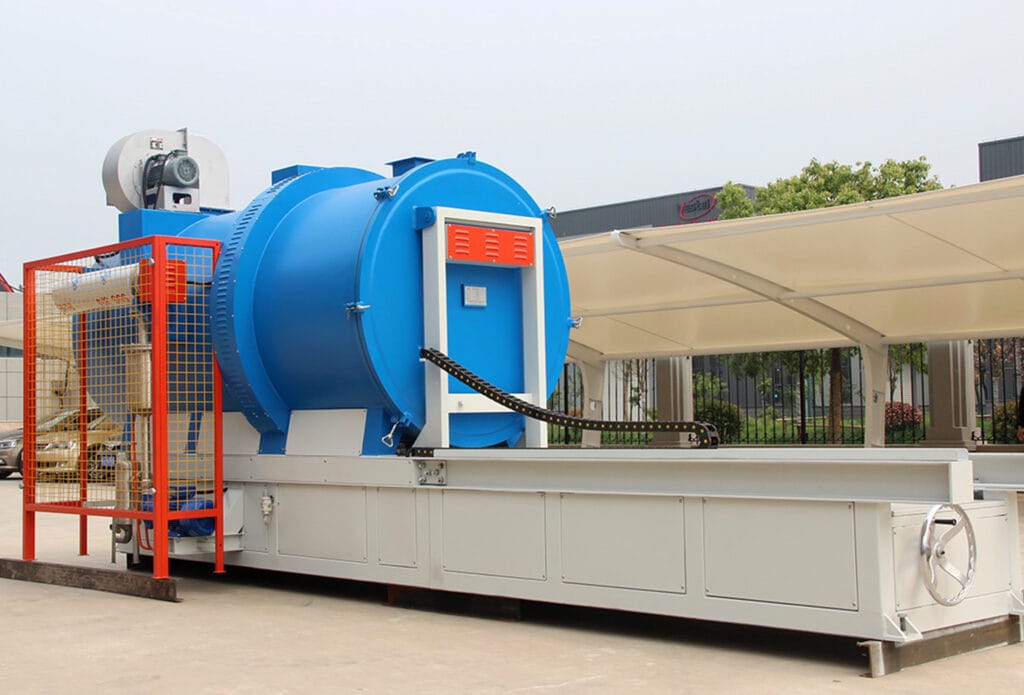
When engineers discuss thermal processing in controlled environments, vacuum cleaning furnaces often serve as the entry point for understanding modern heat treatment systems. These furnaces remove contaminants through thermal decomposition under reduced pressure. However, vacuum cleaning furnaces represent only one category in a broader family of equipment. To select the right system, you need a clear grasp of the main types, their operating principles, and their industrial roles.
Hot-Wall vs. Cold-Wall Vacuum Furnaces
The first major type is the hot-wall vacuum furnace. In this design, the heating elements sit inside the insulation, and the entire chamber heats uniformly. Manufacturers often use hot-wall furnaces for degassing and simple annealing processes. Transitioning to more advanced systems, the cold-wall vacuum furnace offers higher efficiency and cleaner operation. Here, the heating elements and work zone remain hot, but the chamber wall stays cool via water circulation. This design reduces contamination and energy loss. Interestingly, vacuum cleaning furnaces sometimes operate on a cold-wall principle when processing parts with heavy oil or polymer residues.
Vacuum Brazing and Sintering Furnaces
Another essential category is the vacuum brazing furnace. This type joins metals using a filler material that melts at a lower temperature than the base metals. A vacuum environment prevents oxidation, so the joint emerges clean and strong. Aerospace and automotive industries rely heavily on this technology. In parallel, vacuum sintering furnaces consolidate powdered metals into solid components. These furnaces heat compacts to just below their melting point, allowing atomic diffusion without full liquefaction. Without a vacuum, oxide layers would block particle bonding.
Vacuum Hardening and Tempering Furnaces
Moving forward, vacuum hardening furnaces quench metals after austenitization to increase hardness. Typically, high-pressure gas quenching replaces liquid quenching, avoiding distortion. Following hardening, many processes require vacuum tempering furnaces, which relieve internal stresses while preserving strength. Both types demonstrate how vacuum technology supports precision metallurgy.
Where Vacuum Cleaning Furnaces Fit In
Now, where do vacuum cleaning furnaces fit into this landscape? Unlike brazing or sintering furnaces, their primary goal is pyrolysis—burning off binders, lubricants, or organic residues from parts before final heat treatment. For example, metal injection molding (MIM) parts often contain polymer binders. Running them through vacuum cleaning furnaces first removes these binders without leaving ash. Only then do parts move to sintering or hardening. This two-step sequence prevents carbon contamination and ensures consistent material properties.
Vacuum Annealing and Carburizing Furnaces
Furthermore, vacuum annealing furnaces offer stress relief and ductility improvement. They heat materials slowly and cool them under controlled rates. For specialty alloys like titanium or Inconel, annealing in vacuum eliminates surface scaling. On the other end of the spectrum, vacuum carburizing furnaces introduce carbon into the surface layer of steel parts. Although carburizing uses a hydrocarbon gas (like acetylene) at low pressure, the process still requires a vacuum to prevent unwanted reactions. Thus, even gas-assisted furnaces rely on vacuum fundamentals.
Hybrid and Multi-Chamber Systems
You might wonder about hybrid systems. Some modern furnaces combine multiple functions—for instance, vacuum cleaning furnaces with integrated hardening cycles. Such systems first clean the load via thermal decomposition, then immediately raise the temperature for austenitizing and gas quenching. This integration saves time and reduces handling risks. Similarly, multi-chamber furnaces separate cleaning, heating, and cooling zones to optimize throughput.
How to Choose the Right Vacuum Furnace
When selecting a vacuum furnace, consider the contamination level of your incoming parts. Oily stampings or green MIM parts demand vacuum cleaning furnaces upfront. Clean, dry components may skip directly to brazing or sintering. Also, think about batch size and cooling rate requirements. For high-volume production, a continuous vacuum furnace with multiple zones often outperforms a batch type.
Summary: Matching Furnace Type to Your Needs
In summary, vacuum furnaces range from simple cleaning units to sophisticated multi-purpose systems. Vacuum cleaning furnaces play a critical role in preparing parts for subsequent thermal processing. Meanwhile, brazing, sintering, hardening, tempering, annealing, and carburizing furnaces each address specific metallurgical goals. By matching the furnace type to your material and process needs, you achieve cleaner results, lower energy costs, and better mechanical properties. Understanding these distinctions will guide you toward a smarter investment in thermal processing equipment.