
I. Application Background
The production of insulation materials—such as polyimide films, laminates, and insulating varnishes—involves critical processes including coating, hot pressing, curing, and drying. These processes demand exceptional stability, accuracy, and cleanliness from the heat source. Traditional steam heating often falls short due to poor temperature control, high thermal inertia, and risks associated with high-pressure operation.Electric thermal fluid heating systems use electrical energy as the heat source and circulate thermal oil under forced convection. This design enables precise temperature control within ±1°C under low-pressure conditions, with no combustion emissions. These features make electric thermal fluid heaters an ideal match for the high-quality, clean, and safe heating requirements of insulation material manufacturing. In this project, the customer customized two 90kW electric thermal fluid heating systems to provide stable, reliable, and either independent or mutually backup heating for their production lines.
II. Application Requirements
- Precision Temperature Control
In processes like hot pressing and curing, even minor temperature deviations can directly affect the dielectric performance, mechanical strength, and dimensional stability of insulation materials. Therefore, the electric thermal fluid heating systems must support high-precision PID regulation to achieve dual-level control over both outlet oil temperature and process temperature.
- Clean and Contaminant-Free Heating
Cleanroom production environments cannot tolerate combustion exhaust or leak risks. Electric heating eliminates open flames and emissions, while the closed-loop thermal oil circuit prevents foreign particles from compromising the surface quality of insulation materials.
- Continuous and Reliable Operation
Insulation material production often runs continuously—sometimes 24 hours a day. The heating systems must offer high reliability with redundant design for critical electrical components. The dual-unit configuration allows the two heaters to serve as mutual backups or to supply separate process zones independently, preventing a single point of failure from halting the entire production line.
- Safety Protection and Fast Response
The system requires multiple safety features, including over temperature protection, low oil level shutdown, overcurrent protection, and grounding fault detection. Electric heating elements should support staged start/stop or power regulation to minimize grid impact while enabling rapid temperature ramp-up and cooldown as needed by the process.
III. Application Case Study
This custom-built dual-unit solution provides stable, high-efficiency heating for insulation material curing and drying processes, ensuring consistent product quality and improved production efficiency.
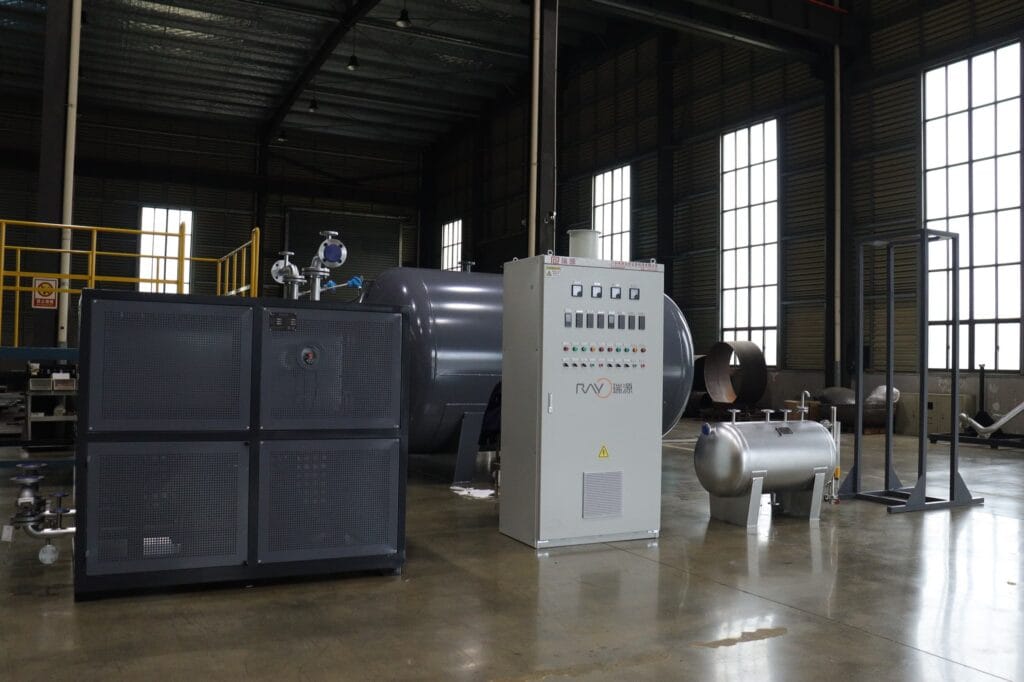
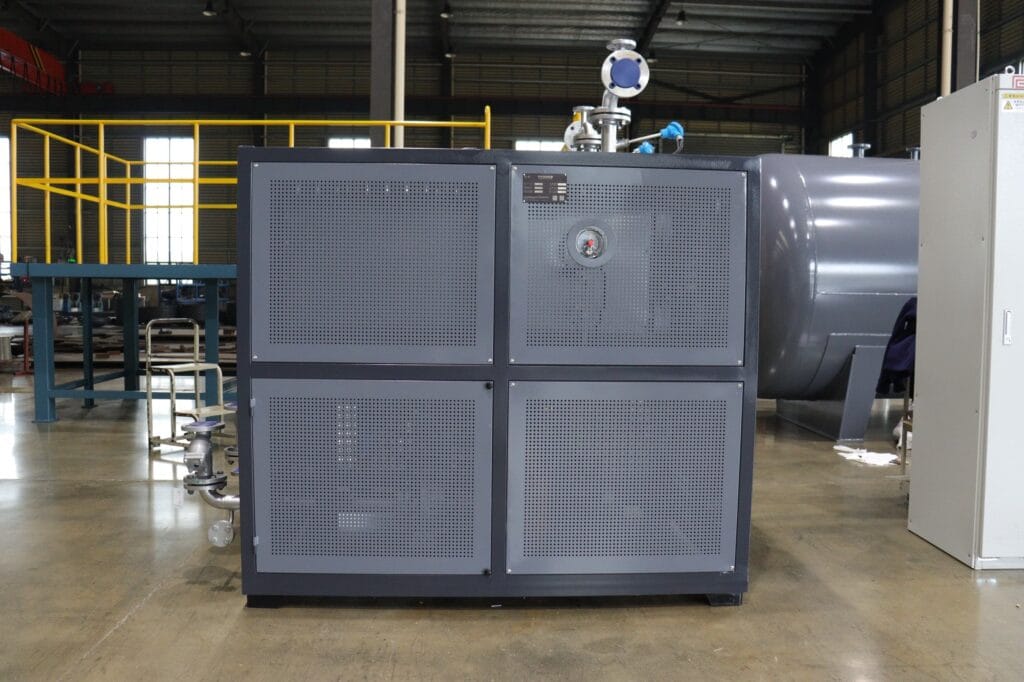
1. Dual-Unit Integrated Design – Two Heaters, One Cabinet, Space-Saving and Cost-Effective
The two 90kW heaters share a single control cabinet and one expansion tank. This compact arrangement reduces the customer’s footprint and lowers capital investment. Centralized controls allow one operator to manage both units, making daily operation far more convenient.
2. High-Quality Components for Accurate and Stable Temperature Control
The main temperature controller uses Omron components, paired with Solid state relays (Goodtech) for zero-crossing output. This combination ensures precise temperature regulation and long service life. Air circuit breakers, contactors, and thermal relays come from the CHINT brand, delivering a robust electrical system suitable for extended continuous operation.
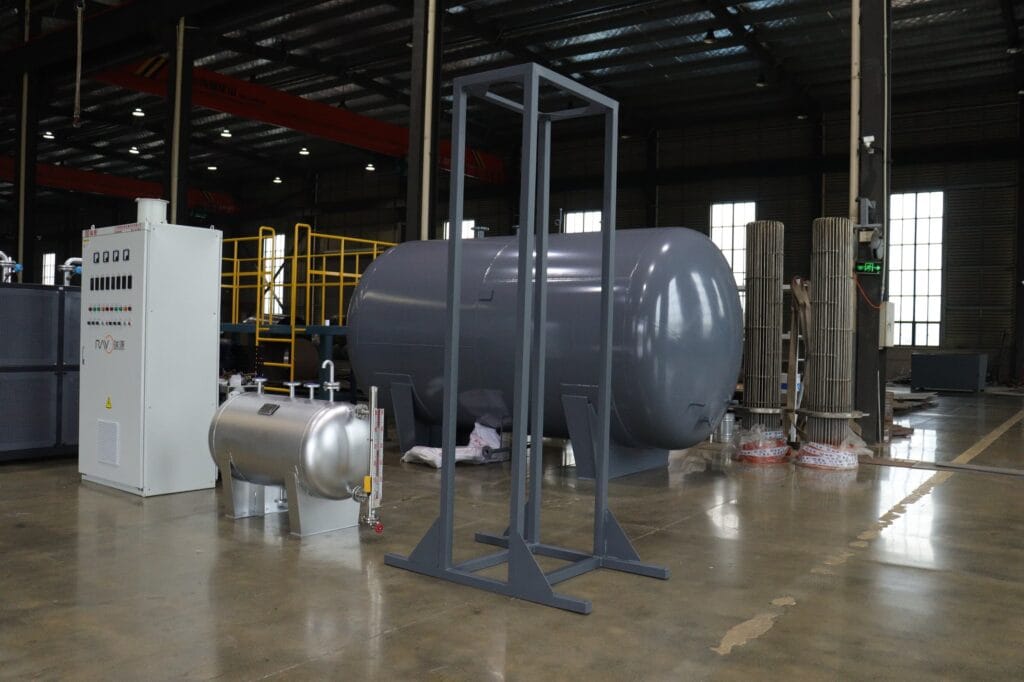
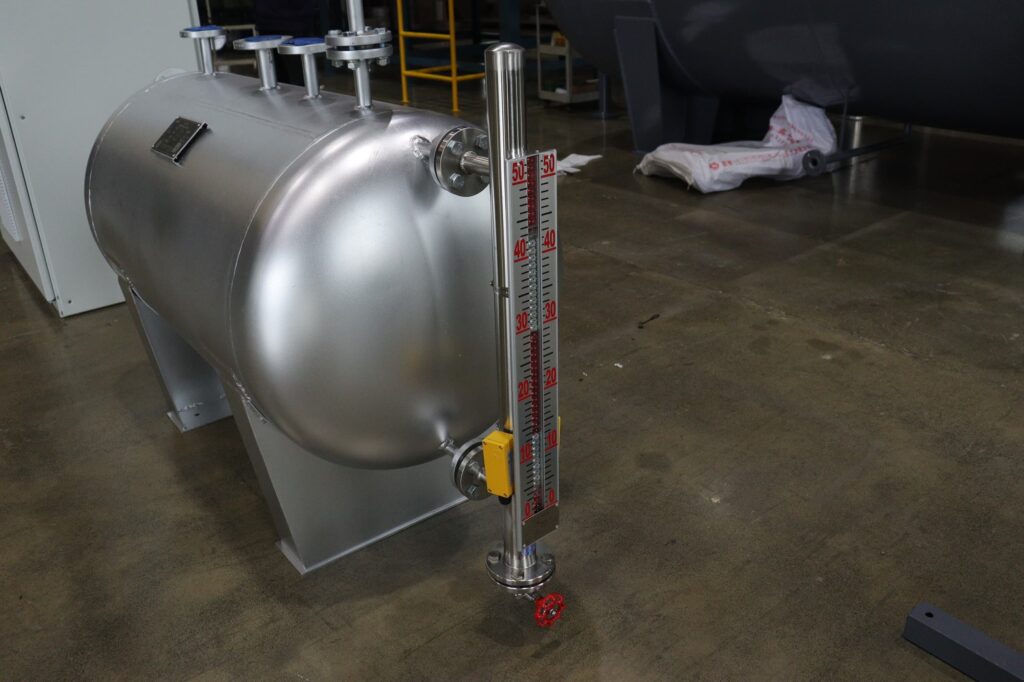
3. Custom Expansion Tank Bracket to Meet On-Site Height Requirements
Because the customer’s facility required a specific mounting height, we designed the expansion tank bracket to reach 2.5 meters (from bottom to lower tank body). This custom approach guarantees proper expansion system operation. Our ability to tailor solutions like this has helped us retain existing customers and earn new ones.
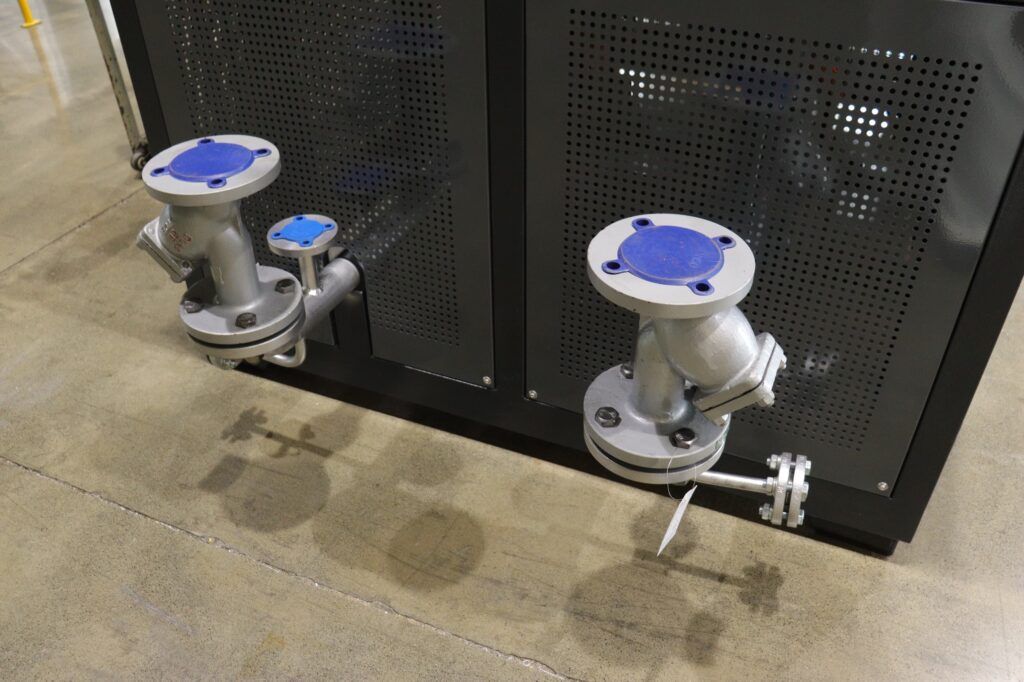
Notably, this order came directly from a repeat customer referral. The client specifically requested an identical setup to one we had previously delivered. Moving forward, we will continue building every electric thermal fluid heating system with care, using quality and service to earn more “customer referrals.”