
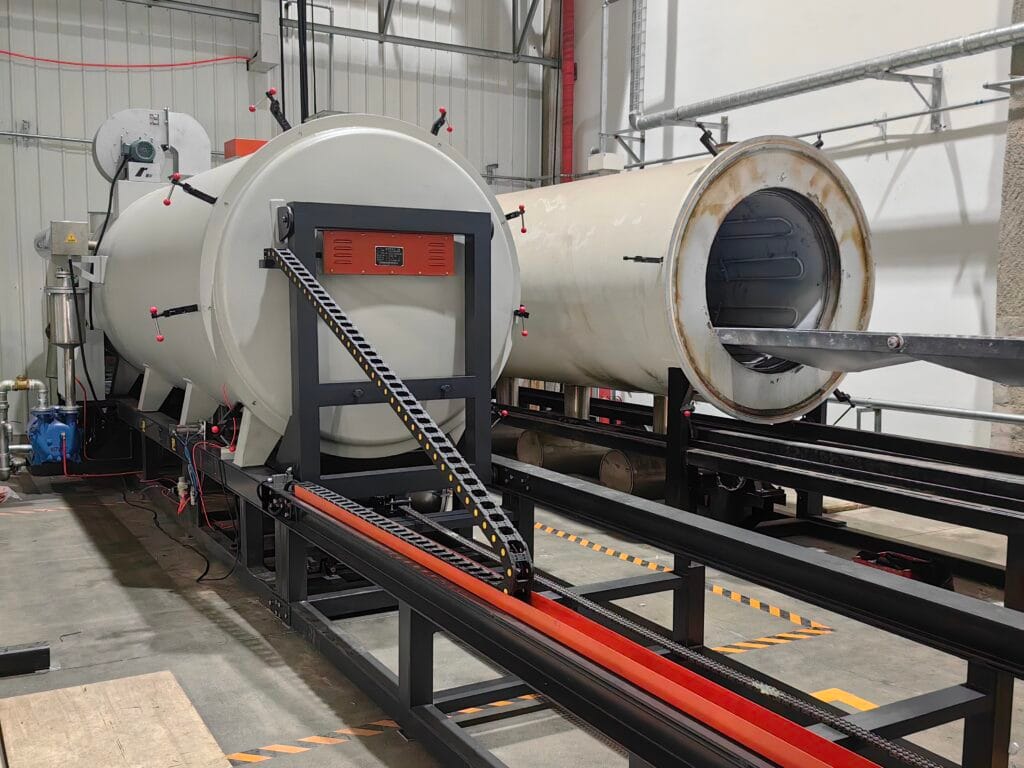
In the production of synthetic fibers and other polymer materials, cleaning precision components such as spinnerets, screws, and filter screens directly determines product quality and production efficiency. Traditional cleaning methods—including open-air calcination, salt baths, and chemical solvents—often fall short. They operate inefficiently, risk damaging delicate parts, consume high energy, generate heavy pollution, and create hazardous working conditions. Today, a more advanced, eco-friendly, and high-performance alternative has become the industry standard: Vacuum Heat Treatment. This article explores the process principles, core components, and transformative benefits of the vacuum cleaning furnace.
Process Principle: Sublimation and Decomposition Under Vacuum
The core principle of Vacuum Heat Treatment leverages the behavior of polymer residues under high temperature and low-oxygen (or vacuum) conditions. The cleaning cycle follows three clear steps.
First, vacuum deoxygenation. The system rapidly evacuates the furnace chamber to a deep vacuum, effectively removing oxygen. This step is critical because it fundamentally prevents oxidation or combustion during subsequent heating. As a result, the process protects the original finish and dimensional accuracy of precision metal components.
Second, high-temperature pyrolysis. Under vacuum protection, the system heats the furnace in precise, programmable stages to a target temperature—typically between 400°C and 500°C, depending on the polymer type. At this stage, polymer residues such as PET (polyester) or polyamide undergo thermal cracking and sublimation. Long molecular chains break down into smaller gaseous or low-boiling-point substances.
Third, condensation and recovery. The system then directs these cracked gaseous products out of the chamber into a dedicated condensation recovery unit. Here, the gases cool and liquefy for safe collection. Any remaining trace carbon deposits stay loosely on the component surface. After the furnace cools within a safe range—using inert gas (e.g., nitrogen) protection—operators easily remove these residues with a simple wipe or air blow. This entire process achieves “vaporization transfer” and centralized pollutant recovery, with no open flame, smoke, or harmful emissions.
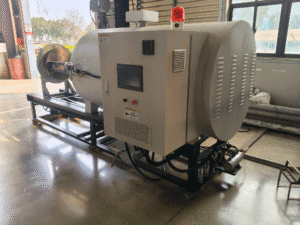
Core Components: The Precision-Driven “Heart” and “Neural Network”
A high-performance Vacuum Heat Treatment system relies on the seamless coordination of several key components. Each plays an essential role.
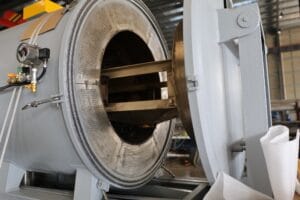
- Furnace Body and Heating System: This serves as the equipment’s structural core. The furnace requires excellent sealing and thermal insulation. The heating system uses zone-arranged electric heating elements, paired with advanced temperature controllers (e.g., Omron or Siemens components). This combination delivers ±1°C precision and programmable multi-stage heating, ensuring uniform temperature distribution and preventing part deformation from uneven heating.
- Vacuum Generation and Maintenance System: This acts as the “heart” that creates the required low-oxygen environment. A vacuum pump set—typically comprising rotary vane pumps and Roots pumps—rapidly pulls the chamber to a high vacuum and stabilizes it throughout the cycle. This process provides the safe, oxygen-free atmosphere necessary for high-temperature pyrolysis.
- Intelligent Control System: This system functions as the “brain and nervous system” of the equipment. Modern Vacuum Heat Treatment systems use fully automatic PLC control, integrating closed-loop monitoring of temperature, vacuum level, pressure, and cycle time. Multiple safety interlocks (e.g., over-temperature, over-pressure, water failure, and power failure protection) ensure reliable operation. High-end models also include an RS485 communication interface, supporting IoT-based remote monitoring and data logging for intelligent plant management.
- Condensation and Recovery System: This component drives both environmental compliance and economic efficiency. By efficiently condensing pyrolysis gases and recovering organic materials, it prevents direct emissions. In many cases, the recovered material can serve as a reusable byproduct, further lowering operating costs.
Environmental Benefits & Typical Application Scenarios
When compared to traditional methods, Vacuum Heat Treatment delivers clear environmental and economic advantages:
- Vs. Calcination (Open Burning): Completely eliminates harmful smoke, dust, and flue gases (such as CO and SOx). The working environment remains clean, and you do not need complex off-gas treatment systems.
- Vs. Chemical Solvents: Avoids the use, storage, and disposal of toxic, flammable, or explosive solvents entirely. Produces no wastewater discharge, thus fundamentally removing chemical pollution risks.
- Vs. Salt Bath Cleaning: Eliminates the need for regular molten salt replacement and avoids salt-spray corrosion. Also removes the high cost of waste salt disposal.
Typical applications focus on polymer processing fields that demand strict cleanliness standards:
- Synthetic Fiber Spinning: Cleaning various spinnerets (including fine-denier and shaped-orifice plates) and component assemblies used for PET (polyester), nylon (polyamide), and polypropylene.
- Plastic Extrusion: Cleaning extruder screws, dies, and screen packs.
- Other Precision Components: Suitable for any metal mold, filter, or part that requires the removal of polymer residues.
Conclusion
With its unique process principles and precision-engineered construction, Vacuum Heat Treatment offers the polymer industry an efficient, clean, and safe cleaning solution. This technology not only replaces outdated and polluting methods but also represents a smart choice for manufacturers committed to green manufacturing, cost reduction, and higher efficiency. As intelligent controls deepen and process optimization continues, vacuum cleaning technology will play an increasingly vital role across broader industrial cleaning applications, driving the manufacturing sector toward high-quality, sustainable growth.