
In precision manufacturing, “clean” is not a slogan. It is a measurable condition that determines bonding strength, surface activity, vacuum integrity, and ultimately the stability of an entire process window. That is why more factories now treat cleaning as an engineered step rather than a supporting task.
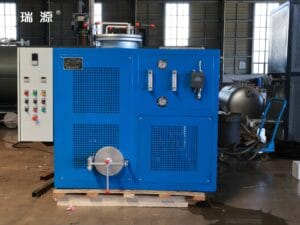
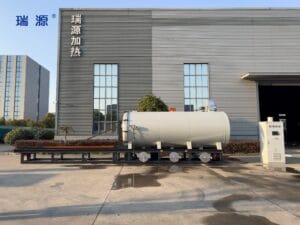
A Vacuum Cleaning Furnace Made in China has become a practical choice for many global buyers who need consistent degreasing, decontamination, and drying under controlled vacuum and temperature. At the same time, the decision still raises real questions: where does it fit best, what technical advantages matter, which quality standards should you verify, and what trends will shape the next generation of equipment?
This guide walks through those points in a structured, engineering-focused way, while keeping the language clear enough for procurement and operations teams to align.
1) What a vacuum cleaning furnace actually solves
Traditional cleaning often fights three enemies at once: residual solvents, re-contamination from air exposure, and inconsistent drying in complex geometries. Vacuum-based cleaning and thermal treatment address these issues by changing the environment, not just the chemistry.
A Vacuum Cleaning Furnace Made in China typically integrates:
- A vacuum chamber for low-oxygen, low-moisture processing
- Controlled heating for volatilizing oils, waxes, and light organics
- Pumping and filtration for stable evacuation and exhaust handling
- Optional inert gas backfill for safe unloading and reduced re-oxidation
As a result, cleaning becomes more repeatable, especially for parts with blind holes, porous surfaces, or assemblies that trap contaminants.
2) Core application industries (where the value is most visible)
Different sectors define “clean” differently. However, the industries below tend to benefit the most because they combine strict cleanliness requirements with complex part geometry and sensitivity to oxidation.
- Aerospace and aviation manufacturing
- Electronics and semiconductor-related manufacturing
- Medical devices and precision instruments
- Powder metallurgy, sintering-adjacent and hard materials processing
3) Key technical advantages (what to evaluate beyond the brochure)
When buyers compare systems, performance differences often hide in details: pump configuration, temperature uniformity, control strategy, sealing design, and how the equipment manages contamination over time. Focus on advantages that directly affect yield and uptime.
- Stronger cleaning consistency through vacuum environment, Vacuum lowers the boiling point of many contaminants and helps pull volatiles out of internal cavities.
- By limiting oxygen and moisture, vacuum cleaning reduces flash oxidation during heating.
- Many quality problems come from the “last step” rather than the main cleaning step: drying.
- Instead of moving parts between open-air washing, drying, and storage, vacuum cleaning can consolidate steps.
- Modern systems increasingly rely on stable recipes rather than operator feel.
For many buyers, a Vacuum Cleaning Furnace Made in China becomes attractive when it offers robust control, stable vacuum performance, and serviceable design—not just a competitive initial price.
4) Quality standards and verification (what “qualified” should mean)
Quality standards depend on your industry and region, but the verification logic stays similar: safety compliance, manufacturing quality system, and measurable process capability.
Manufacturing quality management, Look for a factory that operates under structured quality systems.
Depending on your market, buyers may need:
- CE compliance for the EU
- UL-related requirements for North America (often project-dependent)
- Documented risk assessment and electrical protection design
Even when a supplier can “build to spec,” you still want written evidence that safety is engineered into the product, not added later.
Vacuum and thermal performance acceptance tests
To validate a Vacuum Cleaning Furnace Made in China, define acceptance criteria that match your process, such as:
- Ultimate vacuum level and pump-down time under defined conditions
- Leak rate testing method and pass/fail thresholds
- Temperature uniformity test at working set points
- Repeatability tests across multiple cycles and loading patterns
- Cleanliness verification (process outcome, not just machine specs)
Conclusion
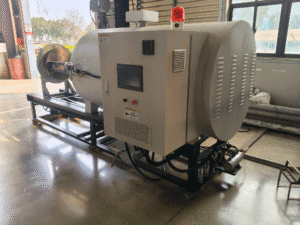
Cleanliness is not a “nice to have.” It is a gatekeeper for yield, reliability, and qualification. When the application demands stable surfaces, low residue, and controlled drying, a Vacuum Cleaning Furnace Made in China can be a strong solution—provided you verify vacuum integrity, thermal control, and outcome-based cleanliness with the same rigor you apply to any critical process equipment.
If you want, share your industry (aerospace, electronics, medical, automotive, etc.), part material, and target cleanliness requirement. With those three inputs, it becomes much easier to narrow the right configuration and acceptance criteria.