
In modern industrial sectors such as petroleum, chemical processing, textile printing and dyeing, and building materials, high-temperature heating processes are essential to production. The thermal oil heater (also known as an organic heat carrier boiler) serves as a special industrial furnace that provides high-temperature heat under low-pressure conditions. Because of its efficiency, stability, and safety, it has become indispensable in the industrial heat landscape.
Operating Principle and Core Components
A thermal oil heater uses thermal oil as the heat transfer medium. Its working principle relies on forced liquid phase circulation. A hot oil pump acts as the power source, driving the thermal oil through a closed loop between the heater and the heat-using equipment. As the oil flows through the heater, it absorbs heat released by burners (coal, gas, or oil) or electric heating elements. Then, this high-temperature oil travels to the heat user, where it releases heat through a heat exchanger to warm the process materials. After cooling, the oil returns to the heater to be reheated. This cycle repeats, ensuring continuous and stable heat transfer.
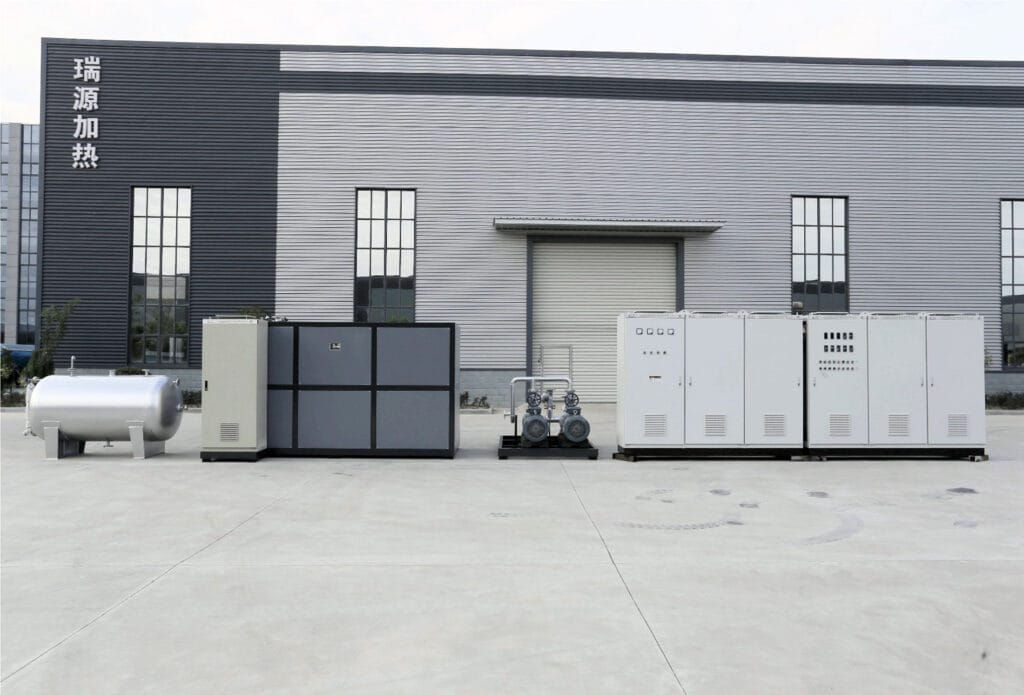
A complete thermal oil heating system generally includes the heater body, a circulation pump, an expansion tank, a storage tank, and precise temperature and pressure control devices. For example, an electric thermal oil heater often comes as a packaged unit. Users only need to connect the power and pipelines, which greatly simplifies installation.
Key Technical Advantages
Compared to traditional steam heating systems, thermal oil heaters offer four main benefits:
- Low Pressure, High Temperature, Inherent Safety: Thermal oil has a high boiling point and a high flash point. Therefore, the system can operate stably at near-atmospheric pressure (0.8-1 MPa) while delivering temperatures up to 320°C or higher. This design completely avoids the physical explosion risks associated with high-pressure steam boilers, achieving the safe characteristic of “high temperature with low pressure.”
- Excellent Thermal Efficiency, Energy Savings: An optimized furnace structure and multi-pass coil design extend the flue gas path and improve heat transfer. High-quality insulation materials significantly reduce heat loss from radiation and exhaust. Consequently, the system’s thermal efficiency often exceeds 90%. Furthermore, the closed-loop circulation minimizes losses from blowdown, leading to considerable energy savings.
- Precise Temperature Control, Strong Process Adaptability: Sophisticated control systems and smart instruments allow for accurate regulation of the outlet oil temperature and temperature differences. This capability meets the strict requirements of temperature-sensitive processes, such as those in fine chemicals and food baking. As a result, the system provides uniform and stable heat, enhancing final product quality.
- Lower Investment, Easy Maintenance: The system operates in a closed loop, eliminating the need for water treatment equipment required by steam boilers. It also avoids boiler blowdown losses, thereby reducing both initial auxiliary equipment investment and operating costs. Additionally, the modular structural design makes the equipment compact, shortens installation time, and simplifies maintenance.
Wide Range of Applications
Due to these advantages, thermal oil heaters are used across a growing number of industries. They are found in nearly all industrial scenarios requiring medium to high-temperature heat:
- Petrochemical Industry: They provide heat for reaction vessels in processes like polymerization, condensation, distillation, and esterification.
- Textile Industry: They serve as the core heat source for operations such as heat setting, drying, and thermal dyeing.
- Building Materials and Food Processing: Applications include drying gypsum boards, heating asphalt, baking food, and processing edible oil.
- New Energy and Materials: Emerging fields, such as lithium battery material drying and rare earth smelting, demand the stability and precise temperature control that thermal oil systems provide.
Key Considerations for Selection and System Design
To ensure long-term, safe, and stable operation, several factors are crucial when selecting and designing a thermal oil heater system:
- Capacity Matching and Redundancy: First, calculate the maximum process heat load and account for pipeline heat loss. The boiler’s rated thermal power should then be 1.2 to 1.5 times this maximum demand. For continuous production, consider installing a standby boiler or using multiple units in parallel.
- Flow Velocity and Pump Selection: The circulation pump’s flow rate must be sufficient to maintain turbulent flow conditions inside the boiler tubes. This typically requires a minimum velocity of 1.5-2.5 m/s to prevent the oil from overheating and forming coke deposits near the tube wall.
- Expansion and Oxidation Prevention: The expansion tank must have enough capacity to accommodate the thermal oil’s volume increase from ambient to operating temperature (usually 20-30% of the total oil volume). Install this tank at the highest point in the system. To slow down high-temperature oxidation of the oil, a nitrogen-blanketed expansion tank is recommended.
- Safety Monitoring and Controls: Comprehensive operating controls and safety monitoring devices are essential. The system must include interlock protection for conditions like over-temperature, over-pressure, flame failure, differential pressure, and flow loss. These features ensure a safe shutdown under any abnormal situation.
Conclusion
As industry demands grow for safer production, lower energy consumption, and precision manufacturing, thermal oil heaters continue to evolve. They are becoming more efficient, cleaner, and smarter, leveraging their unique technical characteristics.
Whether in traditional coal or gas-fired models, or in clean electric versions, these heaters will remain core equipment in modern industrial thermal systems. They provide essential, reliable power for the transformation and upgrading of various industries.
When selecting a system, companies should consider their specific process needs, local energy policies, and safety regulations. It is always best to choose a technically mature solution from a provider with reliable service.
Chat now to speak with our team.